Some days, even a camera app feels like another room full of talking.
Buttons.
Badges.
Pop-ups that ask for attention before you’ve even asked for a photo.
And when your mind is already carrying too much, the smallest friction can feel heavy.
So you stop taking pictures.
Not because you don’t care.
Because you do.
And you don’t want the moment to be interrupted by noise.
This is for that feeling.
For the person who wants a camera that behaves like a simple tool—like a pen, or a key, or a light switch.
Press.
Capture.
Done.
When the Camera Feels Too Loud
A camera should be a doorway.
But many apps turn it into a hallway lined with posters.
They want you to edit before you’ve even seen.
They want you to share before you’ve even felt.
They want the photo to become a project.
Simplicity isn’t about pretending features don’t exist.
It’s about not being forced to meet them all at once.
It’s the difference between walking into a quiet room…
and walking into a store.
What “Simple” Really Means (And What It Doesn’t)
Simple doesn’t always mean “basic.”
And it doesn’t always mean “limited.”
Often, it means the app has good manners.
It stays out of your way.
It doesn’t narrate your choices.
It doesn’t try to become your identity.
Simplicity as relief, not aesthetics
Minimalism is relief.
Not a monochrome theme.
Not a trendy interface.
Relief is when your hands know what to do without your brain holding a meeting about it.
Fewer decisions, fewer regrets
A quiet camera app reduces decisions:
- Where is the shutter button.
- How do I switch cameras.
- How do I change a setting without falling into a maze.
- How do I leave.
That last one matters more than people admit.
Three Quiet Types of Simple Camera Apps
Think of simplicity like three drawers.
You don’t need all of them.
You just need the one that fits your hands.
Type 1: One-button, point-and-shoot calm
These apps treat photography like breathing.
Open.
Click.
Close.
No commentary.
Type 2: Minimal tools with optional depth
These are quiet until you ask them to speak.
They can be simple today.
And deeper later.
Type 3: Privacy-first, offline-first cameras
The calm here isn’t just visual.
It’s emotional.
You feel less watched.
Less tracked.
Less handled.
The Most Peaceful “Just Take the Photo” Picks
Simple Camera
Simple Camera is a straightforward place to land when you want the basics to behave. It has a strong user rating and wide adoption, which matters when you’re choosing something to become your default.
What it feels like:
A small, reliable tool you keep in the top drawer.
Not exciting.
Not needy.
Just there.
People who like it tend to like that it doesn’t demand a learning curve before you can take a normal photo. And when you’re tired, that’s the whole point.
Fossify Camera Beta
Fossify Camera Beta is built around a privacy-respecting, customizable “simple tools” philosophy, and it explicitly positions itself as usable without internet access.
What it feels like:
A quiet room with the lights already set.
You can adjust things—save paths, themes, basics—without the app turning the adjustments into a performance. If your definition of simple includes “not being pushed around,” Fossify’s tone is part of the feature.
Only Camera
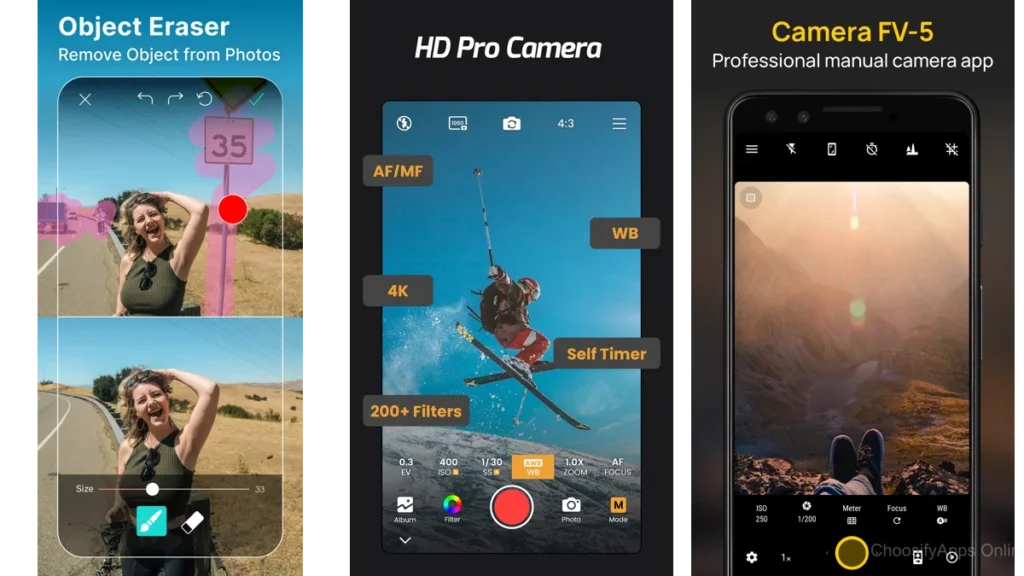
Only Camera – Photo & Video is tiny in downloads right now, which makes it more of a thoughtful niche pick than a mainstream recommendation. But the idea is unusually calm: offline operation, minimal permissions, on-device storage, open-source transparency.
What it feels like:
A pocket notebook.
Not glossy.
Not crowded.
Just yours.
If you’re someone who gets subtle stress from apps that feel “networked,” this is a gentle alternative.
Zerocam
Zerocam is the boldest minimalist statement here: “one-button simplicity” and an anti-overprocessing posture.
And it’s important to say this softly but clearly: the store rating is low.
That doesn’t mean it has no value.
It means it’s more like a very particular chair.
Some people will sit down and feel immediate relief.
Others will wonder why the chair refuses to be anything else.
If you’re drawn to the idea of a camera app that refuses to fuss—no settings, no fiddling—Zerocam is worth trying with realistic expectations.
Conclusion
A simple camera app doesn’t change your life.
It changes your breathing.
It gives you a small pocket of quiet where a moment can happen without negotiation.
And maybe that’s enough.
Maybe the best camera isn’t the one with the most features.
Maybe it’s the one that steps aside.
So you can look at what’s in front of you.
And keep it.
FAQ
What makes a camera app feel “simple” in real life?
A simple camera app reduces decisions. The shutter is obvious. The layout is consistent. And the app doesn’t ask for attention before it lets you take the photo.
Is a privacy-focused camera app really worth it?
If you feel subtle stress about permissions, tracking, or cloud behavior, yes. Privacy can feel like quiet.
Will a simple camera app make my photos look better?
Sometimes. But the bigger change is that you take more photos—because the app doesn’t exhaust you first.
Which app is best if I want manual controls without overwhelm?
Open Camera is a strong “grow into it” choice. If you prefer a more DSLR-like panel, Camera FV-5 Lite is a steady option.
What if I try a minimalist app and it feels too limited?
That’s normal. Minimalism is a trade. If you miss flexibility, move one step up to an app that stays simple on the surface but offers depth when you want it—like Open Camera.