Today is an other trending topic Language Learning Apps With Simple Lessons. I am showing some Apps Detail with you in this article.
A quiet way to begin
You sit.
A window, a mug, the light just starting to arrive.
Learning a language can feel like clearing a room.
Not all at once.
One object at a time.
The best apps don’t rush you.
They respect the space you have—five minutes before a meeting, three in a queue, ten on a train.
What “simple lessons” really feel like
A simple lesson ends before your mind frays.
It has a clean edge.
You know where it starts, where it stops, and you can breathe in the gap that follows.
Short sessions turn learning into a rhythm.
Step in, do a small thing, step out.
No drama. No guilt.
Small rooms of focus
Imagine rooms in a quiet house.
Vocabulary in one.
A phrase in another.
You enter, spend a few minutes, leave the door half-closed, and move on with your day.
The comfort of closure
A tap.
A phrase lands.
You review, you smile, you’re done.
That feeling—a small, complete win—keeps you coming back.
Apps that keep things light
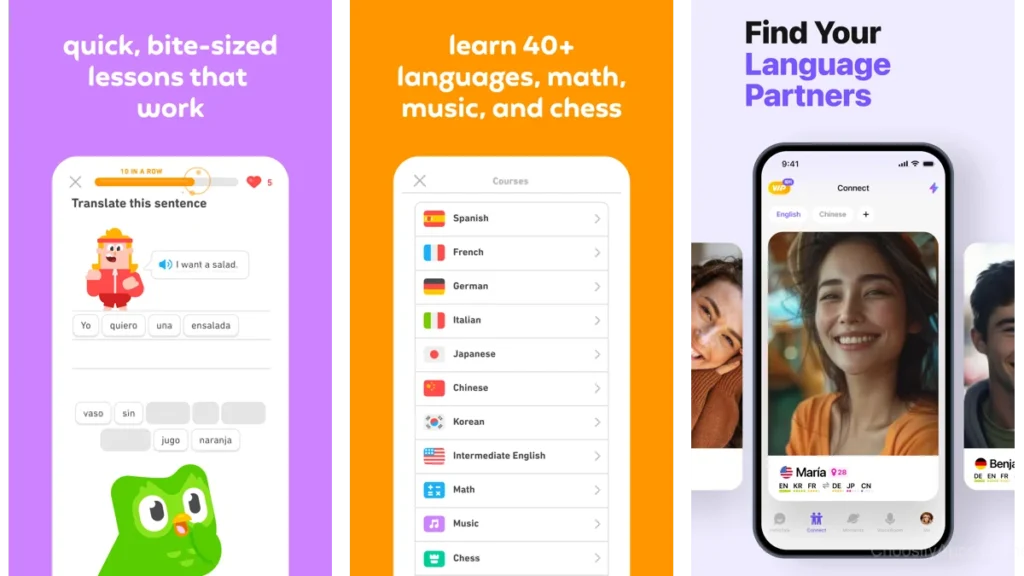
Duolingo vs. Memrise: habit or voice
When a streak helps
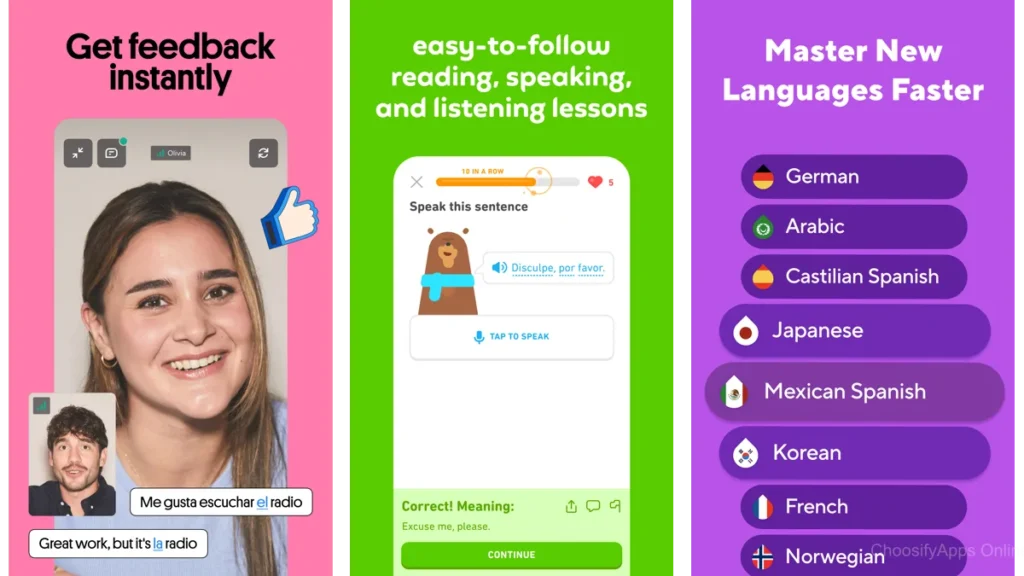
Duolingo leans into habit.
Tiny, colorful steps.
A daily streak that makes one more lesson feel like a small promise kept.
For many, that little flame is enough to show up tomorrow, too.
When real voices matter
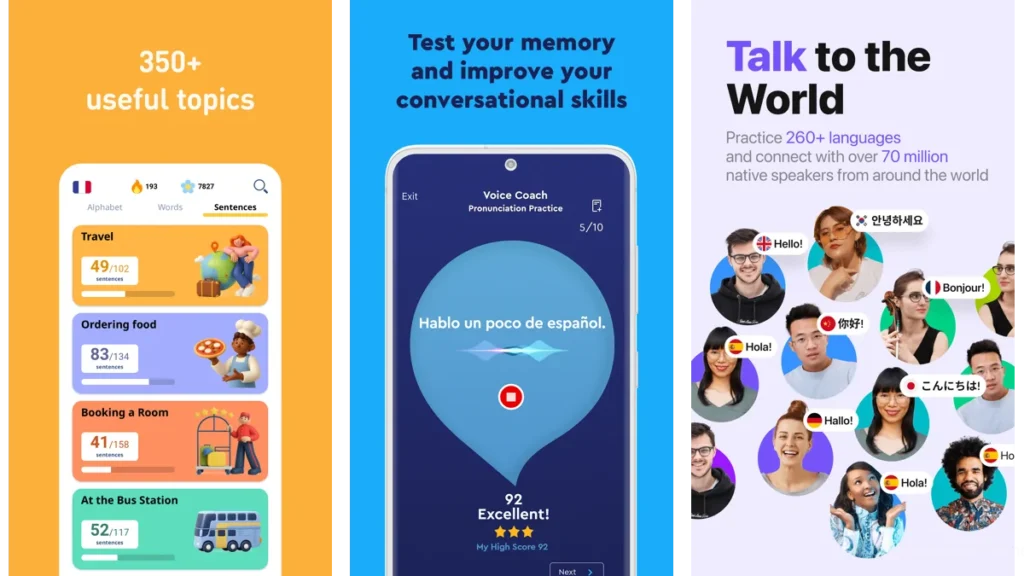
Memrise feels like a brief conversation with the world.
A few seconds of a real person speaking, a clean prompt, and you respond.
It’s quick, human, and grounded in how the language actually sounds.
Busuu and Babbel: clear paths, short steps
Grammar, gently
Busuu gives you structure without heaviness.
A short explanation.
An immediate try-it-now exercise.
It’s the difference between a wall of text and a sentence you can carry.
Dialog in minutes
Babbel puts you inside small scenes.
Order a coffee.
Greet a neighbor.
The lessons end before your attention does, and the phrases are ones you might actually say.
Drops and Mondly: micro-learning with color
Five minutes that count
Drops is a kind of language meditation.
Tap, swipe, a word takes root.
Five minutes and you’re done—no guilt, no grind.
A daily lesson you can trust
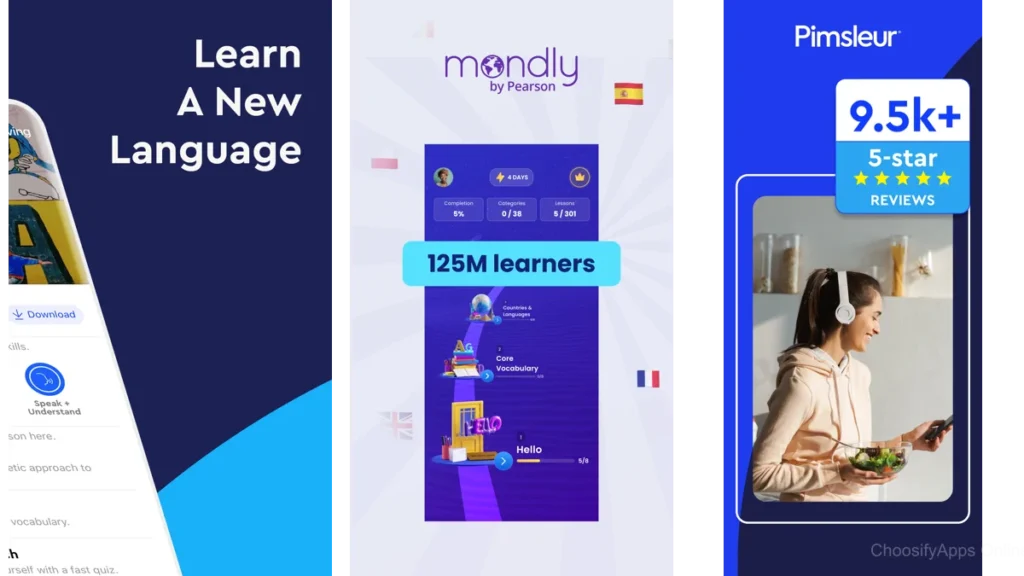
Mondly’s daily lesson is a small anchor.
You open, learn a handful of things, close.
Some days, that’s exactly enough.
LingoDeer and HelloChinese: calm structure
Clarity without clutter
LingoDeer explains just enough grammar to make the next tiny step feel natural.
A sentence, a hint, and the relief of understanding why.
One more small win
HelloChinese brings Mandarin into reach with bite-size pieces that actually finish.
A short clip, a quick check, a line you can say out loud before you close the app.
EWA and Cake: short scenes, quick echoes
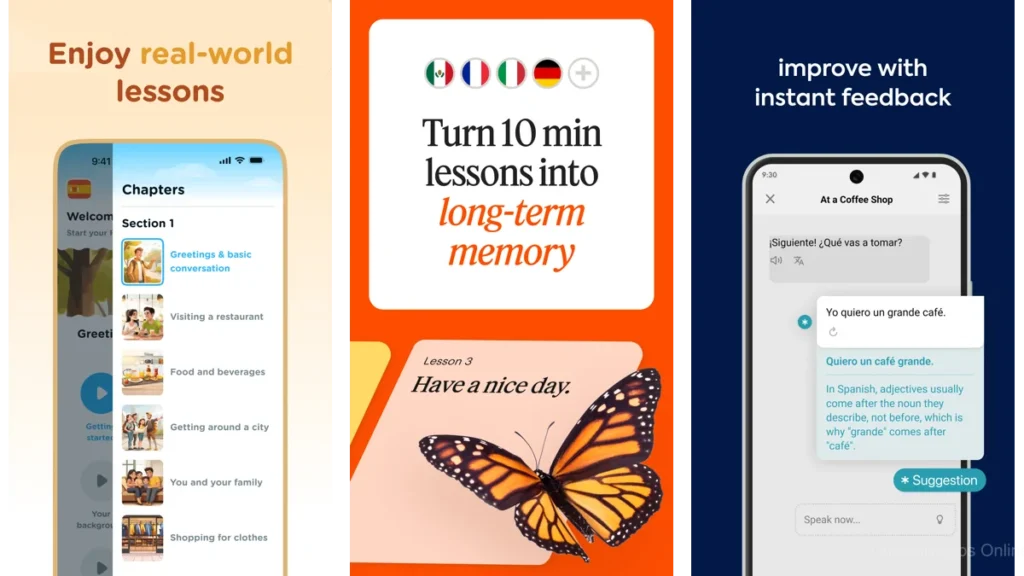
A line you can repeat
EWA uses moments from books and shows.
You touch a word, it yields.
Two minutes later, you’ve learned something you can use.
Listening you can carry
Cake gives you a sliver of video, then your voice gets a turn.
Repeat, check, done.
It’s honest practice squeezed into the gaps of a day.
Lingvist and Clozemaster: focused practice
Vocabulary with edges
Lingvist strips the lesson down to what matters now.
A targeted word, a sentence, your answer.
No noise—just the next helpful thing.
Sentences as tiny tests
Clozemaster offers quick cloze exercises that feel like little puzzles.
One gap.
One guess.
Another step forward, almost effortlessly.
Rosetta Stone & HelloTalk: immersion in small sips
Picture, sound, stop
Rosetta Stone stays quiet and visual.
You match image and sound, then pause.
The lesson ends cleanly, and your brain keeps working in the background.
A message, a correction, done
HelloTalk feels like stepping into a café conversation for five minutes.
You write, someone gently tweaks it, you leave with a better sentence than you arrived with.
A plain-language comparison
What each feels like in the hand
| App | Lesson style | Feels best for |
|---|---|---|
| Duolingo | Gamified micro-lessons | Building a daily habit |
| Memrise | Short native-speaker clips | Real-world sound & phrases |
| Busuu | Guided, brief tasks | Clear structure & feedback |
| Babbel | Quick dialogue scenes | Practical phrases fast |
| Drops | 5–10 minute vocab sprints | Visual learners, time-poor days |
| Mondly | Daily lesson anchor | Light routine you can keep |
| LingoDeer | Short lessons with grammar | Clarity for script-heavy languages |
| HelloChinese | Bite-size Mandarin | Gentle, confidence-building starts |
| EWA | Scenes & bilingual reading | Media-driven motivation |
| Cake | Daily video + speak | Quick listening & echo practice |
| Lingvist | Targeted vocab drills | Efficient progress in minutes |
| Clozemaster | One-blank sentences | Context at speed (post-basics) |
| Rosetta Stone | Immersive picture-first | Quiet, translation-light study |
| HelloTalk | Short social exchanges | Real people, real corrections |
Which one should you choose?
If your attention feels scattered, pick one app that ends lessons fast and ends them clearly.
- You want frictionless starts: Try Duolingo or Drops. Open, learn, close. No weight.
- You need structure you can trust: Choose Busuu, Babbel, or LingoDeer. They explain just enough and keep each step short.
- You’re driven by sound and people: Memrise, Cake, or HelloTalk give you real voices and quick exchanges.
- You want focused practice: Lingvist or Clozemaster turn minutes into measurable vocabulary gains.
- You prefer quiet immersion: Rosetta Stone offers simple, image-led steps that feel calm.
- Learning Mandarin: HelloChinese makes short, gentle progress feel easy.
Choose for the week ahead, not forever.
If it feels light in your hand, you picked well.
Practical, quiet advice
Study as a breath, not a task.
Set a timer for five minutes.
Stop when it ends, even if you want more.
Make endings small, and often.
Finish tiny lessons and let them stand.
Three short sessions beat one long one.
Let the app step aside.
Speak a line out loud.
Write it on a sticky note.
Close the app and keep the sentence with you.
Define a week, not a year.
Pick one app.
Use it for seven days.
Then adjust—gently.
Conclusion: less noise, more language
Simplicity isn’t emptiness.
It’s space.
A good app gives you just enough and then gets out of the way.
A small lesson you can finish.
A line you can say.
A breath you can keep.
When learning feels light, it lasts.
FAQ
1) How long should a “simple” lesson be?
Five to ten minutes is enough. End while you’re still fresh.
2) Can I mix two apps?
Yes, if they serve different needs—one for structure, one for listening. Keep sessions short.
3) What if I miss a day?
Start again tomorrow. Consistency grows from kindness, not pressure.
4) Will short lessons really help me speak?
They help you show up. Speaking grows from frequent, small attempts—whisper the phrase, then say it a little louder.
5) Which app works offline?
Several offer downloads for short lessons (e.g., Rosetta Stone, LingoDeer, Pimsleur “Minis”). Try one week and see if it fits your routine.