AudioBook Apps for those who love to Audio Book instead of reading long Novels.
A Small Moment Before You Press Play
There is a particular pause that happens before an audiobook begins.
Your hand rests on the phone.
Your breath slows.
You are ready to listen.
And then the screen lights up.
For many people, that moment breaks.
Too many buttons.
Too many suggestions.
Too much noise asking for attention.
Audiobook apps with simple navigation respect that pause.
They do not rush you.
They do not shout.
They open the door and step back.
Why Navigation Matters More Than Features
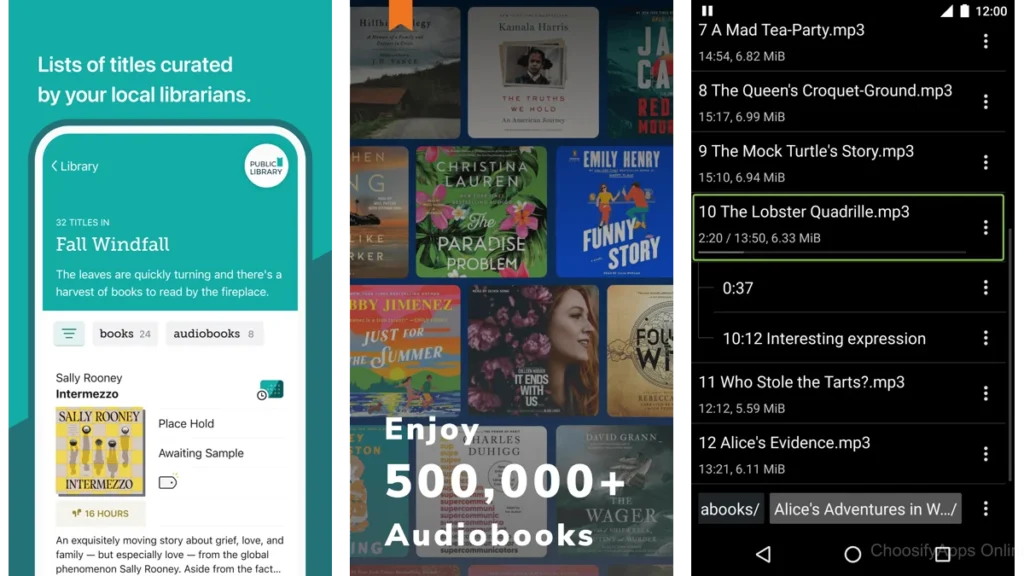
When Too Many Choices Create Noise
Most listening fatigue does not come from the book itself.
It comes from everything wrapped around it.
Carousels.
Promotions.
Recommendations layered on top of recommendations.
Each tap asks for a decision.
Each screen demands energy.
Simple navigation removes that weight.
It lets your mind stay where it wants to be.
With the story.
The Relief of Knowing Where You Are
Good navigation feels like orientation.
You know where your book lives.
You know how to press play.
You know how to return.
There is no guessing.
No hunting.
Just continuity.
What “Simple Navigation” Actually Feels Like
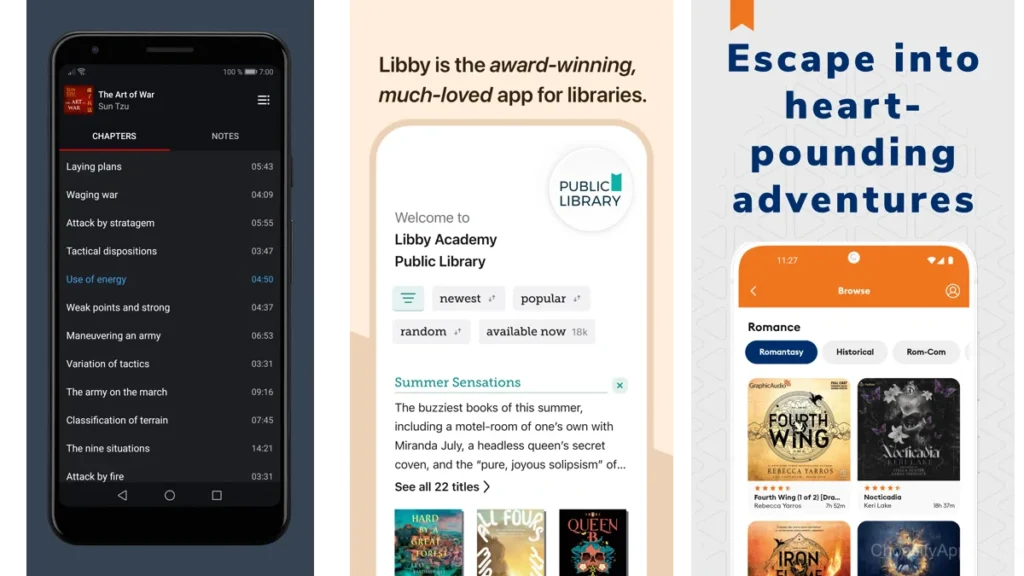
Few Buttons. Clear Paths. Quiet Confidence.
Simplicity is not about fewer features.
It is about fewer questions.
Where is my book?
How far am I?
How do I pause?
When those answers are immediate, the app disappears.
Designed for Listening, Not Browsing
Some apps are built like stores.
Others feel like shelves.
The difference matters.
Shelves wait patiently.
They do not follow you around the room.
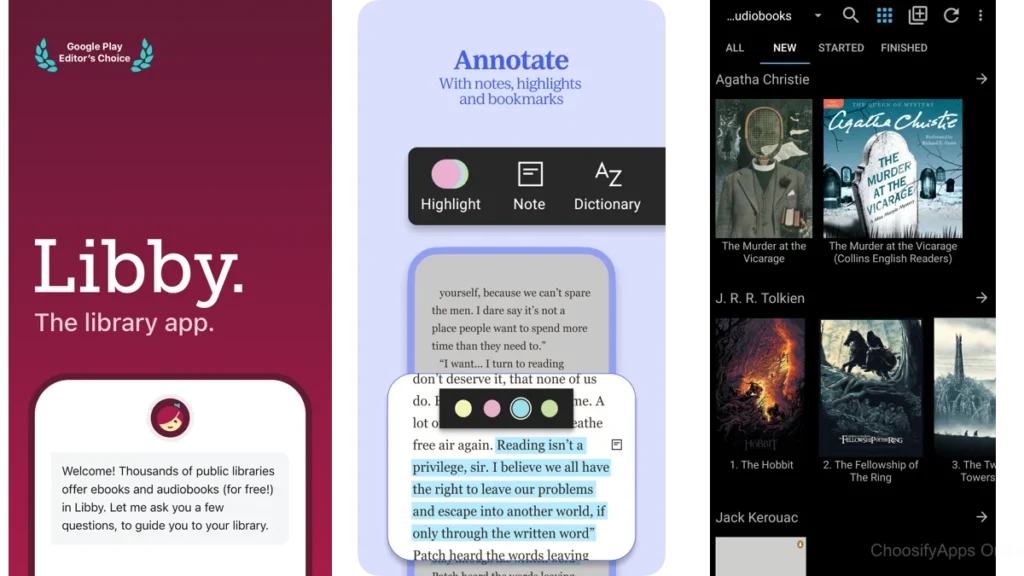
Libby: A Library That Knows How to Stay Silent
Libby feels like entering a familiar building.
Nothing rushes you.
Borrowing Without Friction
Once connected to your library, everything makes sense.
Your loans sit together.
Playback controls are clear.
Chapters are easy to reach.
There is no sense of urgency.
Your book waits.
The Feeling of Familiar Rooms
Libby understands something subtle.
Libraries are about trust.
You return to where you left off.
You close the app knowing it will remember.
Navigation here is gentle and predictable.
That predictability is a form of kindness.
Smart Audiobook Player: Just the Story, Nothing Else
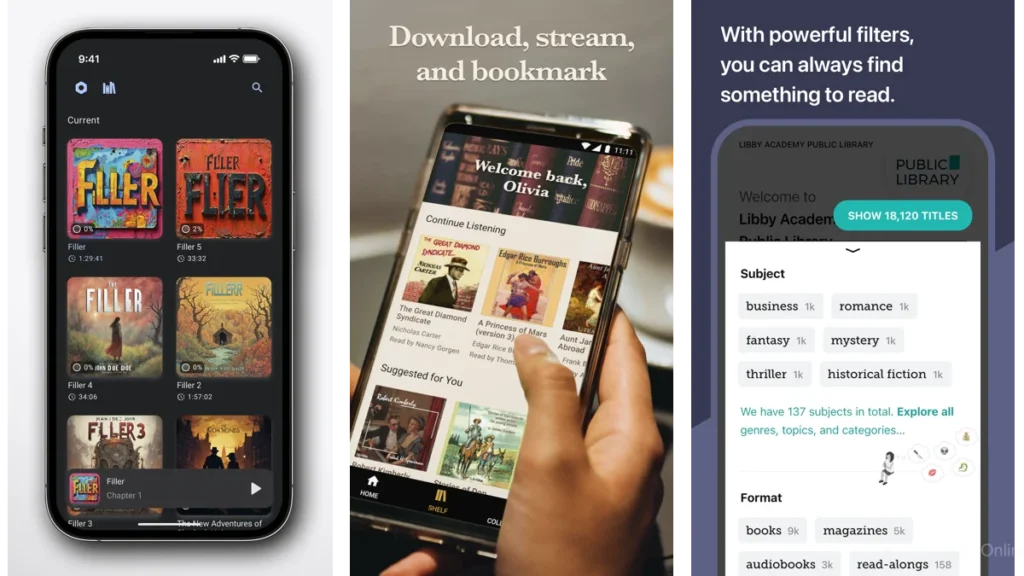
Smart Audiobook Player does not try to impress you.
It simply works.
For People Who Already Own Their Books
There is no storefront.
No browsing pressure.
You bring the files.
The app holds them quietly.
Folders become libraries.
Progress is remembered without ceremony.
Controls That Fade Into the Background
The interface feels like a well-made tool.
You notice it once.
Then never again.
Play.
Pause.
Sleep timer.
Everything stays exactly where you expect it.
Google Play Books & Audiobooks: Familiar Ground
Sometimes simplicity comes from familiarity.
Google Play Books understands this.
When the Interface Gets Out of the Way
If you already use Android, nothing feels foreign.
The player is clean.
Chapter navigation is direct.
Playback controls are large and calm.
There is no learning curve.
Comfort in Consistency
Consistency reduces cognitive load.
You do not think about how to listen.
You just listen.
For many people, that is enough.
Pocket FM: Effortless Flow for Serialized Listening
Pocket FM moves differently.
It flows.
Stories That Continue Without Asking
Episodes line up naturally.
The next part begins without friction.
You are not asked to choose again and again.
The app carries you forward.
Simple Queues, Gentle Momentum
While content-heavy, the listening experience itself is smooth.
Playback is central.
Navigation stays secondary.
For serialized storytelling, that matters.
Lightweight Audiobook Players: The Power of Less
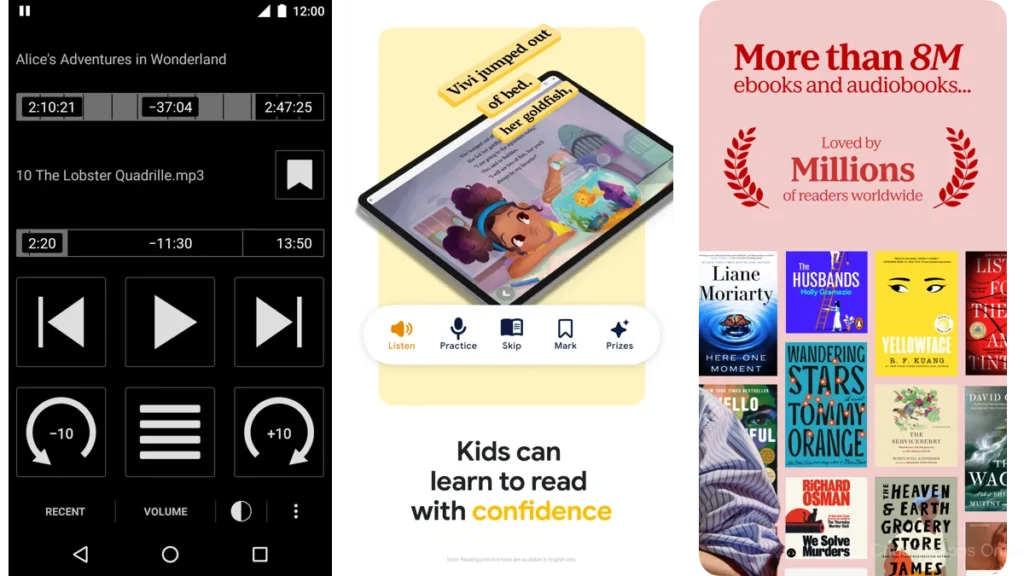
Some apps exist solely to play audio.
Nothing more.
No Storefronts. No Distractions.
These apps open directly to your books.
No banners.
No promotions.
Just files and progress.
Designed for Files, Not Funnels
They assume trust.
They assume you know what you want.
And they do not interrupt you once you begin.
A Quiet Comparison
| App | Best For | Navigation Feel |
|---|---|---|
| Libby | Library listeners | Calm and familiar |
| Smart Audiobook Player | Local files | Minimal and focused |
| Google Play Books | Android users | Consistent and clean |
| Pocket FM | Serialized stories | Smooth and continuous |
Which One Should You Choose?
Ask yourself a simple question.
Where do your audiobooks live?
If they come from the library, Libby feels like home.
If they live on your device, Smart Audiobook Player stays out of your way.
If you want familiarity, Google Play Books is steady ground.
If you prefer ongoing stories, Pocket FM keeps momentum gentle.
There is no wrong choice.
Only the one that creates the least friction for you.
Practical Advice for Choosing Calm
Start With Where Your Books Live
Do not chase features.
Start with location.
Library.
Files.
Store.
Let that decide for you.
Let the App Fade After Setup
The best sign you chose well?
You stop thinking about the app entirely.
When the App Finally Steps Aside
Technology works best when it disappears.
When the story fills the room instead.
These audiobook apps with simple navigation understand that.
They make space.
They reduce noise.
They let listening feel like rest.
Conclusion
There is relief in knowing where to tap.
There is comfort in silence between screens.
The right audiobook app does not ask for your attention.
It gives it back.
And in that small return, listening becomes what it was always meant to be.
A pause.
A voice.
A clear path forward.
Frequently Asked Questions
Are simple audiobook apps better for focus?
Often, yes. Fewer distractions make it easier to stay present with the story.
Do minimalist apps lack useful features?
Not usually. They keep the essentials and remove the rest.
Is Libby good for beginners?
Very. Its navigation feels intuitive even on the first use.
Can I use these apps offline?
Most of them support offline listening once content is downloaded.
What matters more: content or interface?
When the interface is simple, content has room to breathe.