Today Topic About Breathing Exercise Apps With Clean Design in which i will show you some apps who provide Breathing Exerceise app with Clean.
There are moments when the noise is not loud.
It is internal.
A tight chest.
A shallow breath.
A feeling that the day is already leaning too close.
In those moments, productivity tools feel wrong.
Motivational language feels heavy.
What helps instead is space.
A small pause.
A slow inhale.
An app that knows when to stay quiet.
This is a careful look at breathing exercise apps with clean design.
Not the loud ones.
Not the ones that promise transformation.
Just the ones that give you room to breathe.
Why Breathing Apps Matter More Than Ever
Breathing is automatic.
Until it isn’t.
Stress narrows it.
Screens compress it.
Deadlines shorten it.
Most of us do not need more information about breathing.
We need reminders.
Gentle ones.
Apps can help when they don’t try to do too much.
When they feel less like software and more like a window left open.
Clean design matters here because breath is fragile.
Visual clutter pulls attention away from the body.
Too many options create pressure where there should be release.
The best breathing apps feel like silence with structure.
What “Clean Design” Really Means
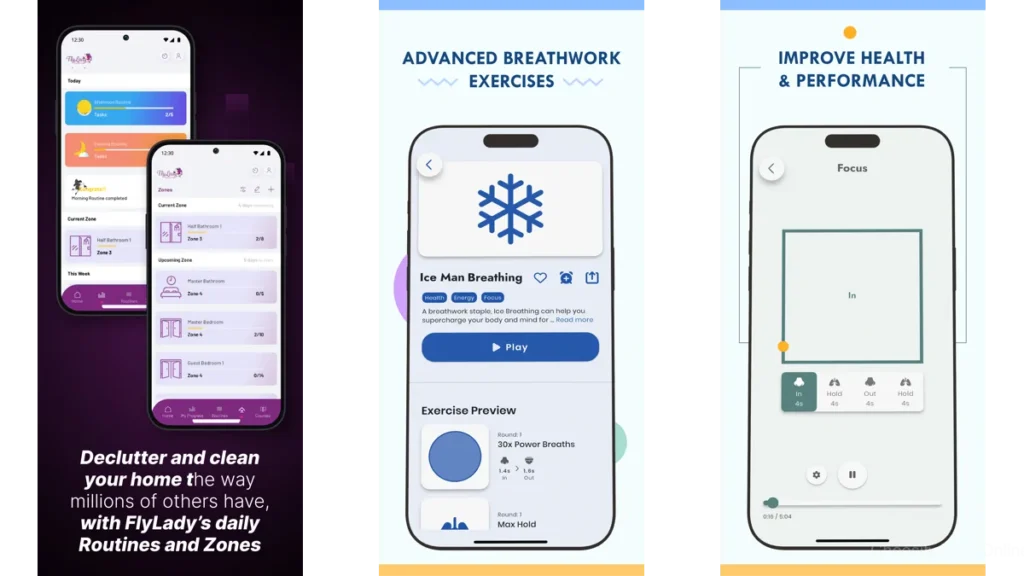
Clean design is not white space for aesthetics.
It is relief.
It means:
– Few choices, clearly framed
– Soft movement instead of sharp alerts
– Colors that rest, not excite
– No urgency, no streaks, no timers shouting
A clean breathing app steps aside once it begins.
You notice your lungs, not the interface.
Some apps shout.
These do not.
How These Apps Were Chosen
Each app here shares something quiet.
They:
– Focus on breathing, not wellness dashboards
– Avoid visual clutter
– Respect short sessions
– Feel intentional rather than addictive
Ratings and downloads matter, but feeling matters more.
These apps do not ask for attention.
They hold space.
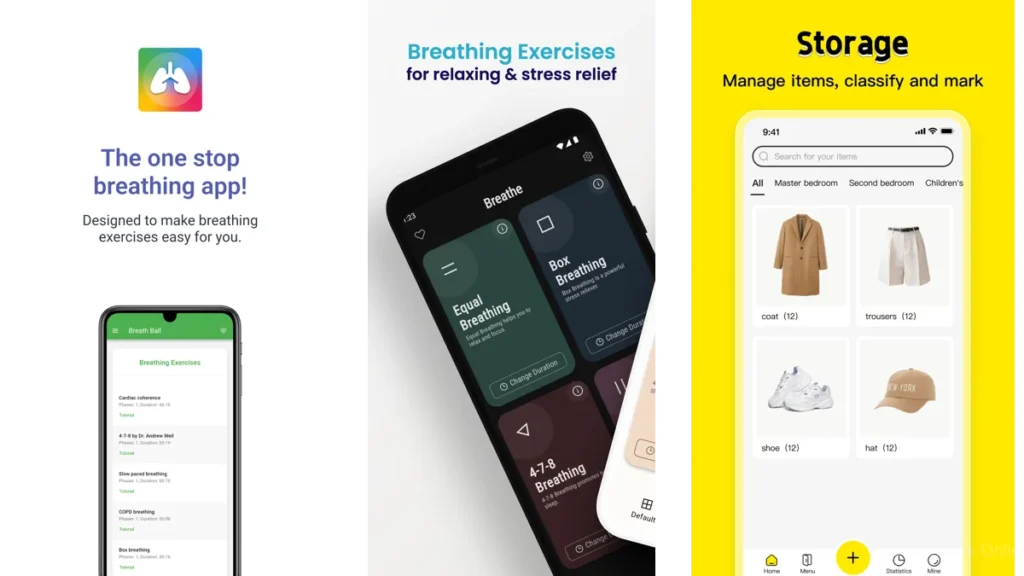
Breathe: Relax & Focus
This app feels like a metronome for the lungs.
Nothing extra.
No onboarding lecture.
You choose a breathing pattern.
The screen breathes with you.
It is useful when your mind feels scattered.
The pacing is steady.
The visuals are restrained.
There is comfort in its predictability.
A sense that nothing unexpected will happen.
This app does not try to inspire you.
It simply stays present.
Breathwrk
Breathwrk offers more structure without becoming noisy.
It introduces breathing as a practice you can return to.
Different sessions for different moods.
Still, the design remains grounded.
Each session feels contained, like a room with the door closed.
For people who want guidance without overwhelm, this works well.
You feel accompanied, not instructed.
It is breathwork with a soft voice.
Paced Breathing
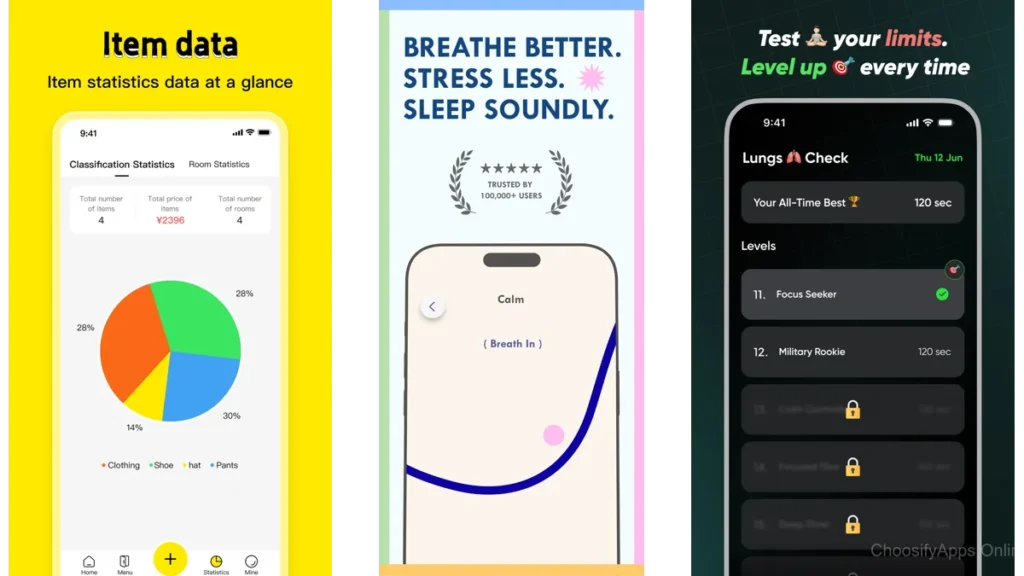
This app centers on rhythm.
The visuals move slowly.
The timing is adjustable.
It is especially useful when anxiety feels physical.
When the body needs structure more than explanation.
You follow the motion.
Your breath follows next.
Nothing competes for attention.
The app knows why you are there.
Breathing Zone
Breathing Zone is practical.
Short sessions.
Clear pacing.
A feeling of medical calm without clinical coldness.
This app is good when you need relief quickly.
Between meetings.
Before sleep.
It respects your time.
It also respects your nervous system.
Pocket Breath Coach
Pocket Breath Coach feels personal.
You can adjust breathing cycles.
You can slow things down more than most apps allow.
The interface does not rush you.
It waits.
This is the kind of app you open quietly, almost privately.
Like stepping into an empty stairwell for a moment of air.
Single-Purpose Breathing Apps
Breathing Exercise (Box Breathing)
One function.
One pattern.
There is comfort in that limitation.
Box breathing is powerful because it is simple.
This app does not dilute it.
You open it.
You breathe.
You close it.
Nothing lingers.
Bilka — Breathing Exercises
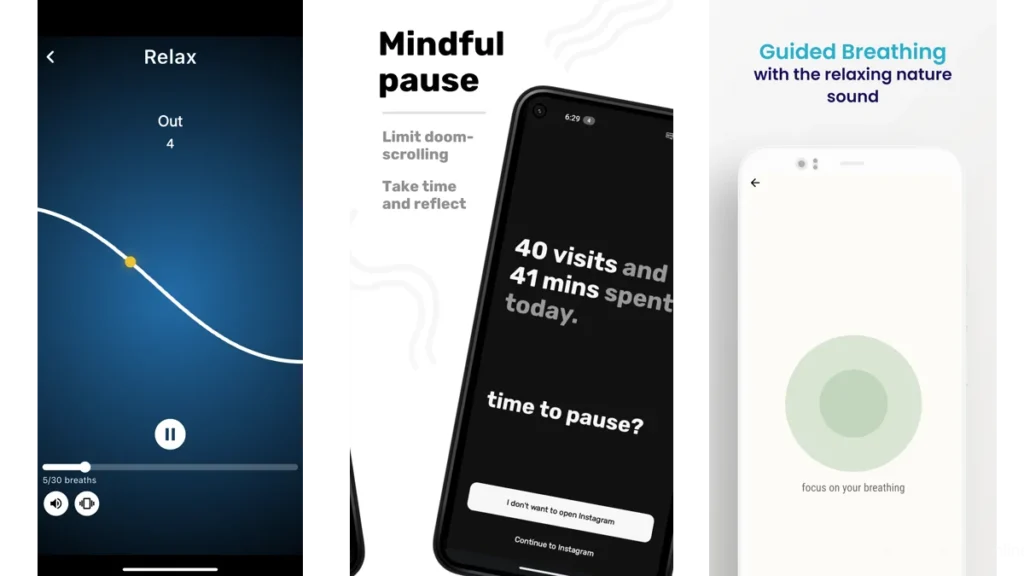
Bilka feels gentle in tone.
The guidance is minimal.
The experience is smooth.
It works well for people new to breathing exercises.
There is no pressure to understand anything deeply.
You just follow.
RespiRelax+
This app values short practices.
Five minutes.
Sometimes less.
It is built for moments when calm feels distant but time is limited.
The design reflects that urgency without amplifying it.
It offers a bridge back to baseline.
Breah
Breah is almost invisible.
No ads.
No distractions.
It exists only for breathing.
And then it steps back.
This is rare.
Breathing Inside a Larger Space: Calm
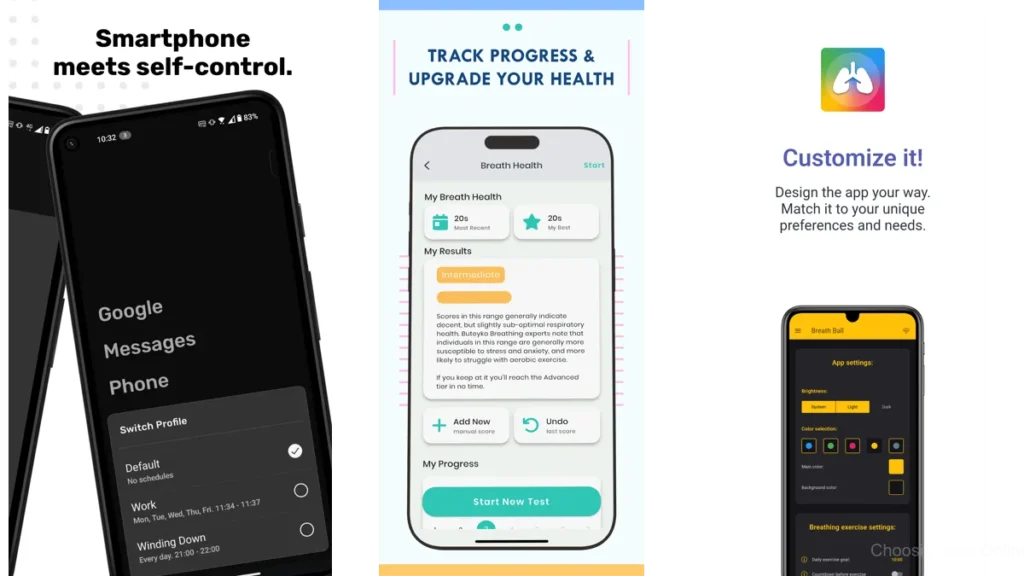
Calm is broader.
Breathing is one room inside a larger house.
For some, that context is comforting.
The breathing exercises are thoughtfully designed.
They benefit from Calm’s visual restraint and pacing.
For people who want breathwork alongside sleep or meditation, it can feel cohesive.
A Quiet Comparison
| Feeling You Want | Best Fit | Why It Works |
| Immediate calm | Breathing Zone | Short, grounded sessions |
| Gentle guidance | Breathwrk | Structured but soft |
| Minimal focus | Breathe / Breah | Nothing extra |
| Personal pacing | Pocket Breath Coach | Adjustable rhythms |
Which One Should You Choose
Ask yourself one question.
Do you want guidance or silence?
If you want silence, choose the simplest app.
The one with the fewest screens.
If you want support, choose the one that feels calm, not motivating.
There is no wrong choice here.
Breath is forgiving.
Practical Advice for Using These Apps
Use them briefly.
Do not build rituals that feel heavy.
One session before bed.
One session between tasks.
Lower the screen brightness.
Turn off sound if visuals are enough.
Let the app disappear once your breath steadies.
A Reminder About Technology and Rest
Technology should finish its job and leave.
If an app makes you feel watched, measured, or pressured, it is not serving calm.
Breathing does not need tracking.
It needs attention.
Conclusion
Calm does not arrive loudly.
It enters the way air enters a room.
Gradually.
Without announcement.
These breathing apps do not promise change.
They offer space.
Sometimes that is enough.
FAQ
Do I need a breathing app to breathe better?
No. But a gentle guide can help you remember.
How long should a session be?
Two to five minutes is often enough.
Are these apps good for anxiety?
They can support moments of tension, especially when used consistently.
Should I use sound or visuals?
Choose whichever feels less demanding.
Can I use these apps every day?
Yes. Light, regular use works best.