Learning rarely begins with ambition.
It usually begins with a pause.
A moment at a desk.
A phone in your hand.
A sense that you need to remember something, but not everything.
Flashcards have always lived in that space between urgency and care.
Small tools.
Gentle repetition.
A way to return to a thought without being overwhelmed by it.
In their best form, flashcard apps do not rush you.
They wait.
This guide looks at flashcard apps for quick learning not as products, but as experiences.
How they feel to use.
How they sit beside your day.
How quietly—or loudly—they ask for your attention.
Why Flashcards Still Work When Everything Else Feels Heavy
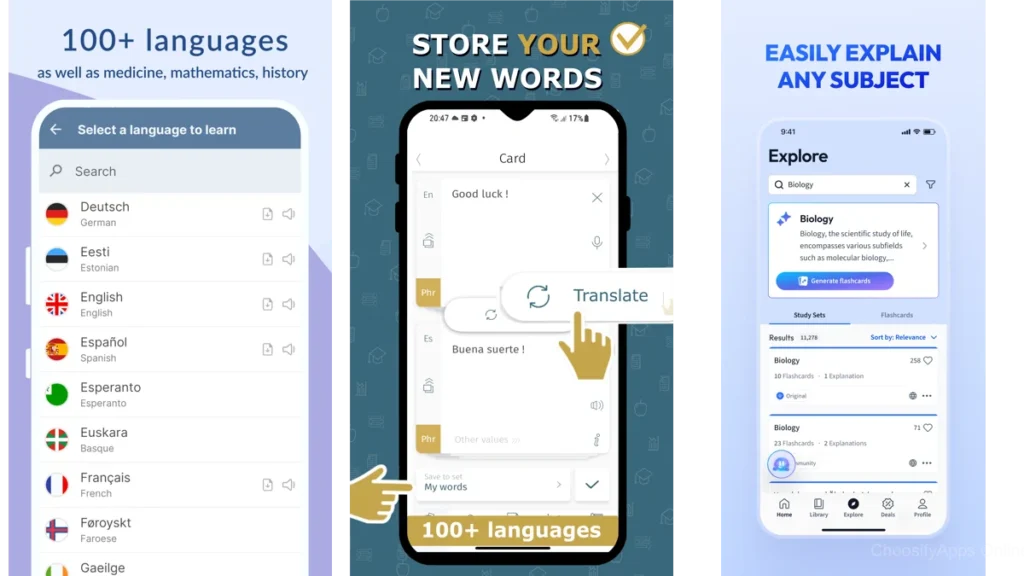
Flashcards endure because they respect limits.
They break learning into pieces that fit into a breath.
A spare minute.
The space between tasks.
You don’t need momentum.
You don’t need motivation.
You just need to turn one card.
Quick learning isn’t about speed.
It’s about frictionless return.
The apps below understand this in different ways.
AnkiDroid Flashcards — A Long Wooden Desk That Remembers for You
AnkiDroid feels like sitting at a solid desk that has been there for years.
It does not charm you.
It does not explain itself too much.
It simply waits, holding exactly what you need to review today.
The spaced repetition system is its quiet strength.
Cards surface just before memory fades, not when anxiety spikes.
Over time, something subtle happens.
You stop worrying about what you’ll forget.
The system carries that weight for you.
For learners managing large subjects—medicine, languages, exams—AnkiDroid becomes less of an app and more of a routine.
Not beautiful.
But deeply reassuring.
Brainscape — A Room With Soft Instructions
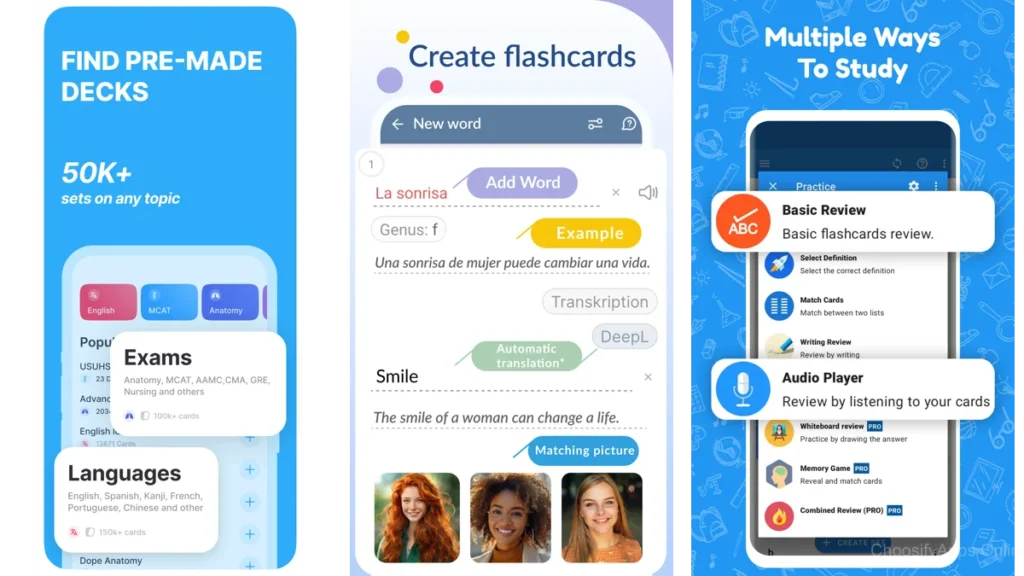
Brainscape feels guided without being controlling.
Instead of asking how many cards you studied, it asks how confident you feel.
That single shift changes the tone entirely.
Learning becomes reflective.
You check in with yourself.
You slow down.
Its strength lies in emotional pacing.
You are never pushed to sprint.
Only nudged to return.
Brainscape suits learners who want structure but resist rigidity.
Those who learn best when they feel seen, not measured.
Simple Flashcards Plus — A Clear Table and Nothing Else
There is relief in tools that do not introduce themselves.
Simple Flashcards Plus opens quietly.
No accounts.
No onboarding journey.
No suggestions.
Just cards.
This app works best when learning is a background task.
Vocabulary on a commute.
Notes while waiting.
It doesn’t manage your progress.
It doesn’t predict your future.
It trusts you.
For many, that trust is the feature.
Memrise — A Window That Lets Language In
Memrise is technically more than flashcards, yet it still belongs here.
Its cards are wrapped in voices, rhythms, and short moments of human speech.
Learning feels less like studying and more like listening through an open window.
The app works well when quick learning needs warmth.
When repetition alone feels too sterile.
Not silent.
But human.
Lexilize Flashcards — A Multilingual Drawer You Open Often
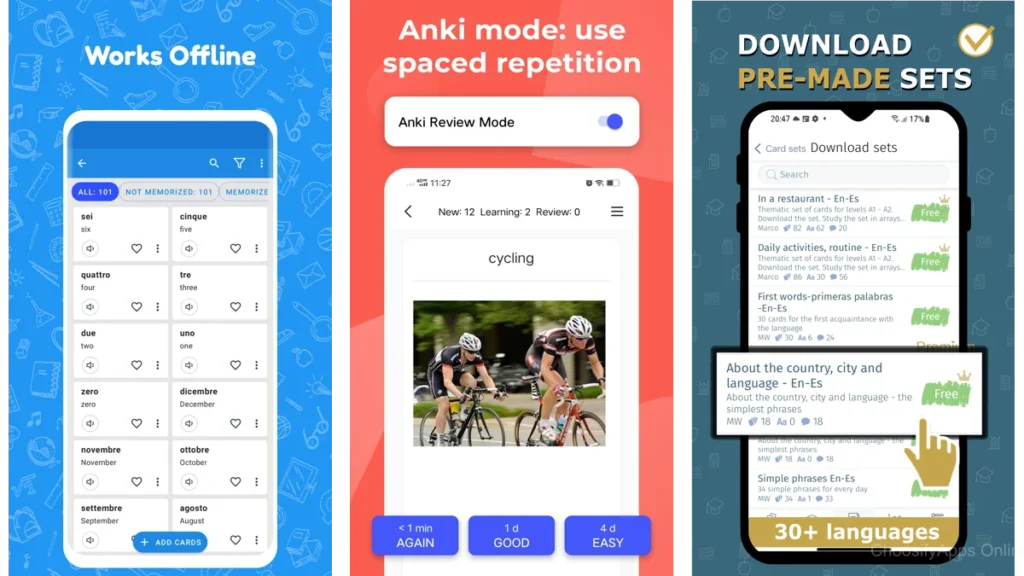
Lexilize is a tool you return to without ceremony.
It holds many languages without drama.
No performance.
No pressure.
You open it.
You review.
You close it.
That simplicity is its calm.
It suits learners who move between languages or topics, who want consistency without complexity.
How These Apps Feel Side by Side
| App | Best For | How It Feels |
|---|---|---|
| AnkiDroid | Deep, long-term retention | Steady, dependable |
| Brainscape | Guided confidence-based study | Supportive, reflective |
| Simple Flashcards Plus | Fast, distraction-free review | Silent, respectful |
| Memrise | Language learning | Warm, conversational |
No app here is “better.”
Only more suitable for different days.
Which One Should You Choose?
Ask yourself one question.
When you think about studying, what do you crave most?
If it’s relief from remembering schedules, choose AnkiDroid.
If it’s gentle reassurance, choose Brainscape.
If it’s speed and silence, choose Simple Flashcards Plus.
If it’s human connection, choose Memrise.
Your answer may change over time.
That’s allowed.
Using Flashcard Apps Without Burning Out
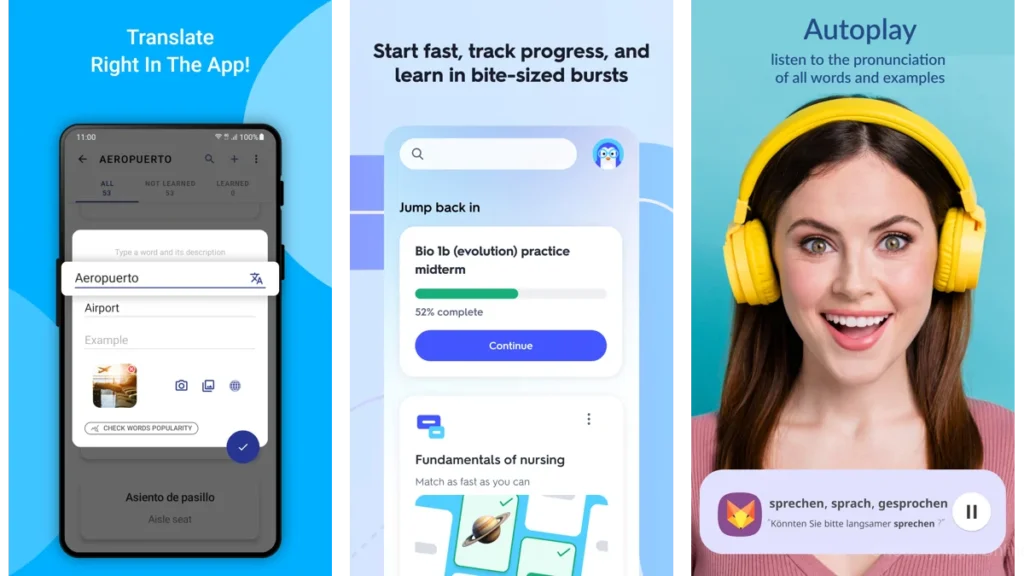
Quick learning becomes exhausting when it stops being small.
A few quiet suggestions:
- Study fewer cards than the app allows
- Stop before fatigue, not after
- Let missed days stay missed
- Use flashcards as touchpoints, not tasks
Learning lasts longer when it leaves room.
A Gentle Recommendation From Choosify Apps
If you are overwhelmed, start with Simple Flashcards Plus.
It asks nothing of you.
If you are rebuilding a habit, Brainscape offers a softer landing.
If you are carrying heavy material, AnkiDroid will hold it with you.
Choose the app that reduces noise, not the one that promises speed.
Conclusion
Flashcard apps work best when they disappear.
When learning slips quietly into the day.
When memory feels less like a burden and more like a room you can return to.
Quick learning is not about urgency.
It is about ease.
And ease is something worth choosing.
FAQ
Are flashcard apps good for short study sessions?
Yes. They are built for brief, focused returns rather than long stretches.
Do I need spaced repetition to learn effectively?
Not always. It helps with retention, but simplicity can be just as powerful.
Can flashcard apps replace traditional studying?
They work best as companions, not replacements.
Which app is best for beginners?
Simple Flashcards Plus or Brainscape offer the gentlest entry.
Is quick learning less effective than deep study?
Not when it respects attention and avoids overload.