Some mornings, the problem isn’t discipline.
It’s noise.
You open your phone to do one small thing—drink water, stretch, read a page—and an app greets you like a carnival.
Badges.
Confetti.
A streak warning that sounds like a threat.
And suddenly your habit isn’t a habit anymore.
It’s a performance.
This is for the days when you don’t want to be “motivated.”
You want to be steady.
You want something that does its job and then steps aside.
A tool that feels like a quiet room.
When a habit app feels like a slot machine
Gamification can work.
But it often works the way bright lights work.
It keeps you awake, even when you’re already tired.
The quiet cost of points, streak anxiety, and constant nudges
Points turn your life into a scoreboard.
Streaks turn one missed day into a story about failure.
And notifications—when they’re designed for urgency—leave you bracing all day, waiting for the next tap on the shoulder.
If you’re already carrying mental overload, that extra layer matters.
A habit should feel like placing a cup back on a shelf.
Not like trying to win a prize.
What “non-gamified” really means in practice
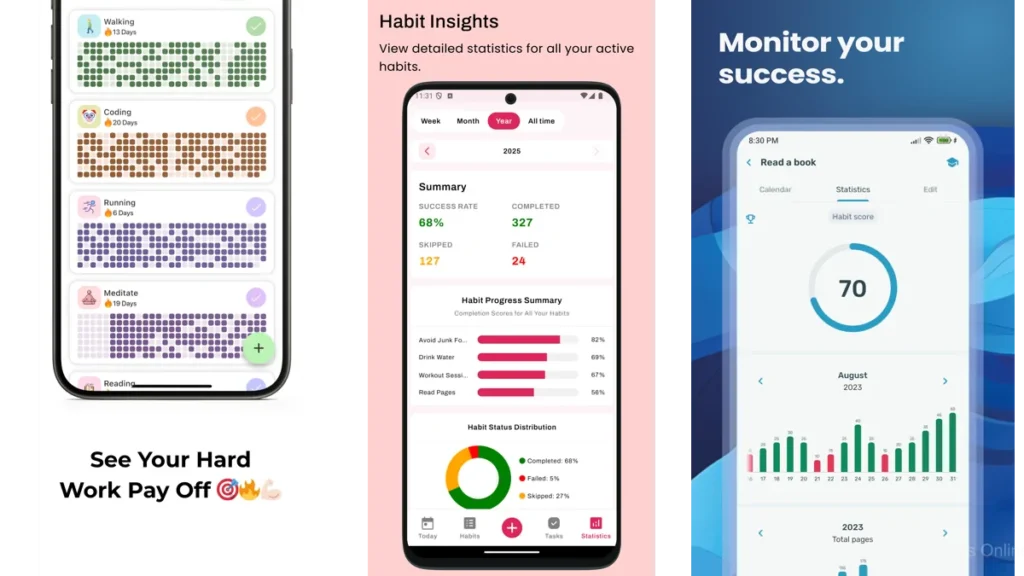
On Android, truly “no gamification” is rare.
Many apps still show streaks or charts.
The difference is intent.
A calm habit app doesn’t try to hook you.
It doesn’t punish you.
It doesn’t turn your day into a game you can lose.
It simply helps you remember what you said you cared about.
A calmer standard: what to look for instead
Before we name apps, it helps to name the feeling.
The feeling you want after you log a habit.
Not dopamine.
Relief.
Simple logging that doesn’t ask for a performance
Look for apps that make logging almost boring.
A tap.
A mark.
A quiet confirmation.
The less ceremony, the better.
Privacy, offline-first design, and fewer accounts
A surprising source of calm is not signing in.
Not syncing everything.
Not wondering where your data goes.
Apps like Loop explicitly emphasize privacy and offline use.
Others, like HabitsGo, frame their entire identity around local storage and less social pressure.
Forgiveness built into the system
A gentle app assumes you’ll miss days.
Because you will.
Not from laziness.
From being human.
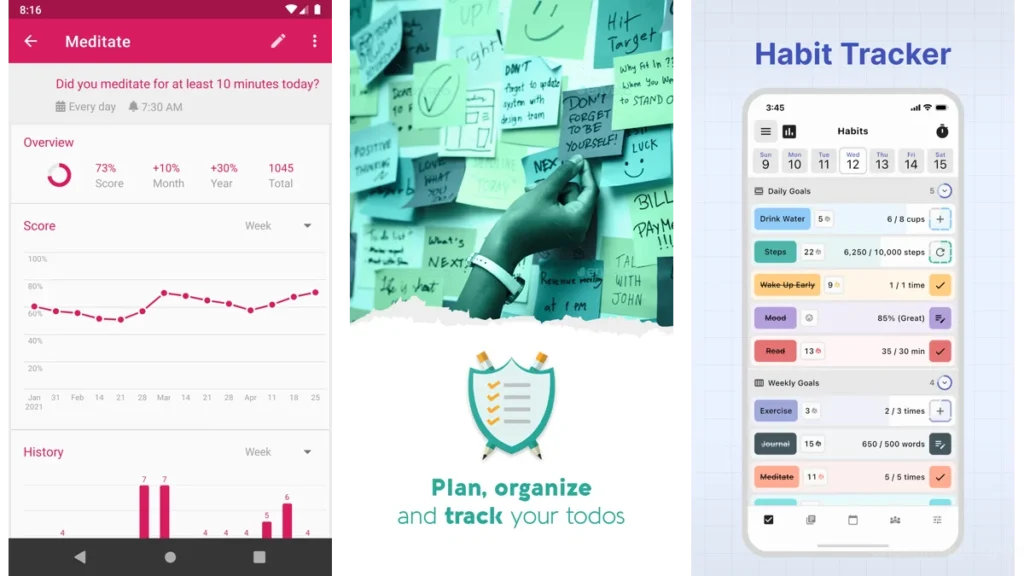
Some apps talk about “habit strength,” which can soften the cliff-edge feeling of streaks.
The apps that don’t shout
Below are experiences, not feature lists.
What it feels like to live with these apps for a while.
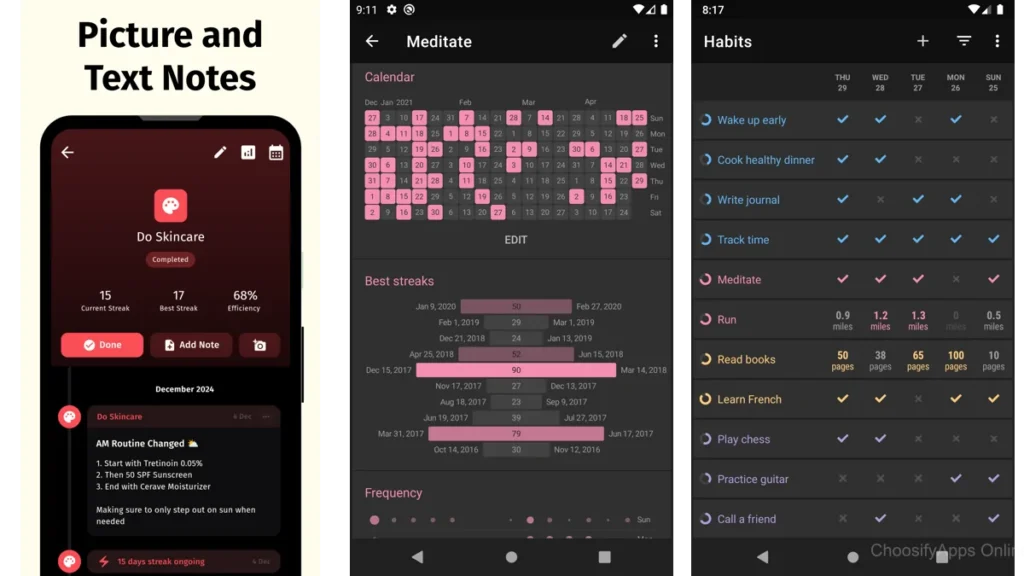
Loop Habit Tracker: a quiet ledger for consistency
Loop is the app you install and then stop noticing.
That’s the compliment.
It’s minimal, widely used, and grounded in the idea that habits grow like plants—slowly, through repetition. It’s also explicitly ad-free and open source, which tends to attract people who want tools, not tricks.
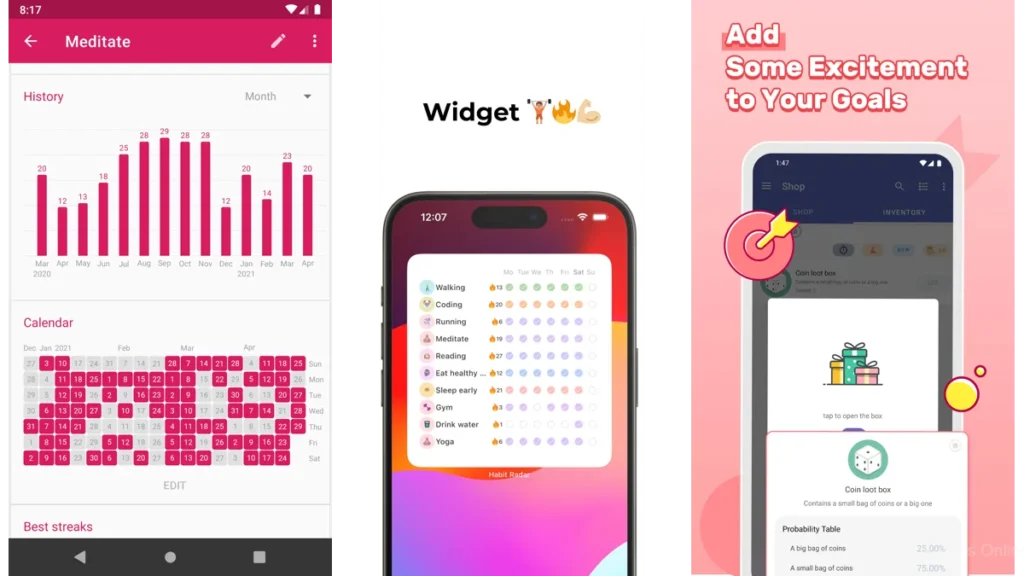
Loop does show streaks.
But it doesn’t worship them.
It also frames progress as “strength,” which matters on weeks when you’re not perfect, just present.
If you want a stable default, this is the one many people quietly settle into.
DailyHabits: monthly rhythm over daily perfection
DailyHabits leans into a monthly view and flexible monthly goals.
That matters.
Because months have texture.
Travel happens.
Work spikes.
Sleep breaks.
A monthly frame says, “Let’s look at the whole room,” not just the one messy corner.
If streaks make you anxious, a month-based mindset can feel like unclenching your jaw.
Way of Life: patterns, not prizes
Way of Life has been around long enough to feel like an old tool in a drawer.
Not perfect.
Not for everyone.
But useful for one thing: noticing patterns.
It’s less “win the day” and more “tell the truth about your week.”
For some people, that’s the real breakthrough.
Not motivation.
Awareness.
Habitmap: a year at a glance
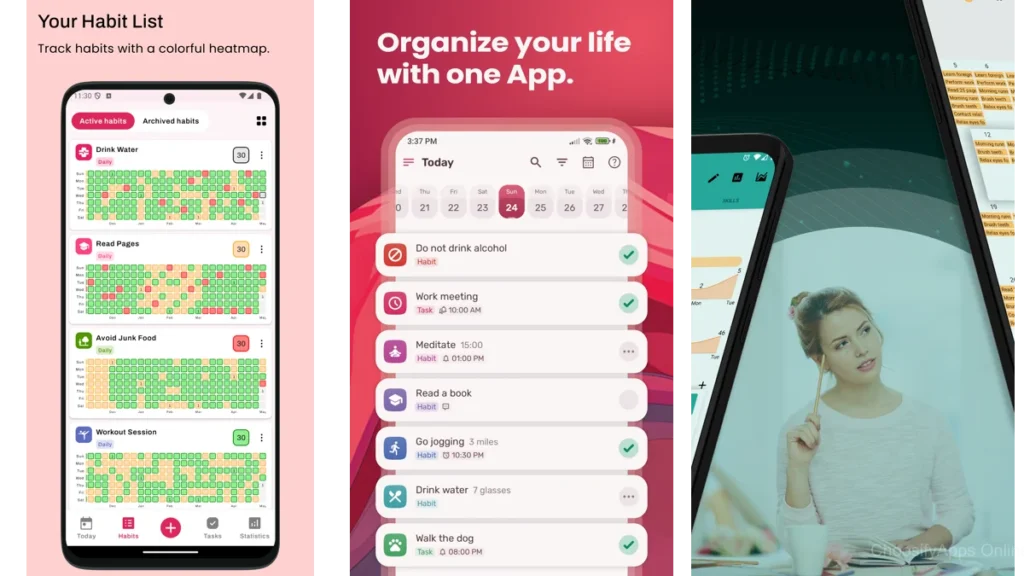
Habitmap’s heatmap view can feel like reading weather.
Not judgment.
Information.
A heatmap doesn’t scold you.
It simply shows where life was consistent and where it wasn’t.
If you’re tired of pep talks, a heatmap is oddly soothing.
HabStick: privacy-first, distraction-free
HabStick speaks directly to the people who want their habit data to stay close.
Offline-first.
No accounts.
A strong emphasis on being distraction-free.
It still includes streaks and stats, but the tone is different.
More like a tool chest.
Less like a stage.
Minimalist Habit Tracker (BitPoet): the smallest possible tool
Some apps try to be everything.
This one tries to be almost nothing.
Timer, counter, yes/no.
A few taps.
Then you leave.
For certain personalities—especially those sensitive to digital clutter—this can feel like finally finding a clear surface to work on.
Istiqomah: open-source calm
Istiqomah frames itself as ad-free, open source, and privacy-respecting, with a focus on clear statistics.
When you’re choosing a “quiet” app, trust matters.
Open-source signals often attract people who value transparency over persuasion.
Weekly: stepping back to the pace of weeks
Weekly is built around a weekly lens and local storage.
This is underrated.
A week is a humane unit of time.
It lets you miss a Tuesday without feeling like you ruined your life.
HabitsGo: private, offline guidance
HabitsGo is new, but its message is clear: offline, private, and explicitly “no gamification pressure.”
If you want gentle guidance without turning your habit into a social product, this direction is worth watching.
Habit Root & HabitHive: newer options with “strength” and flexibility
Habit Root emphasizes a minimal interface and “habit strength” framing.
HabitHive emphasizes flexible schedules and a more forgiving approach to streak timing.
They’re smaller and newer.
Which can be a risk.
But sometimes new apps are quieter simply because they haven’t learned to shout yet.
A plain-language comparison table
| App | Best for | Feels like |
|---|---|---|
| Loop Habit Tracker | A trusted minimalist default | A quiet ledger with gentle graphs |
| DailyHabits | Reducing daily pressure | A monthly wall calendar |
| Habitmap | Seeing the year clearly | A weather map of your consistency |
| BitPoet Minimalist Habit Tracker | Absolute simplicity | A small checkbox on a clean desk |
| HabStick | Privacy-first tracking | A locked drawer that opens quietly |
Which one should you choose
This part is simple.
Choose based on what you’re trying to protect.
If you want the most trusted minimalist default
Pick Loop Habit Tracker.
Large user base, calm design, privacy emphasis, and a “habit strength” approach that doesn’t collapse after one missed day.
If you want less streak pressure
Try DailyHabits for its monthly framing.
Or Weekly if you want the week to be your basic unit of truth.
If privacy is the whole point
Try HabStick (offline-first, no accounts)
Or explore HabitsGo if you like the idea of local guidance without social pressure.
If you want the smallest interface possible
Pick Minimalist Habit Tracker (BitPoet).
It’s almost aggressively simple, in a good way.
If you want patterns more than motivation
Try Way of Life.
It’s about noticing what repeats.
Practical advice for building habits in a tired mind
Apps are not the habit.
They’re the pencil.
Here’s how to keep them in their place.
Make the habit smaller than your motivation
If your habit requires a strong mood, it’s not a habit yet.
Shrink it.
One page.
One minute.
One glass.
A habit should fit inside a busy day like a key fits a pocket.
Use reminders like doorways, not alarms
An alarm says, “Now.”
A doorway says, “If you have a moment.”
Choose apps that let reminders be gentle.
And set fewer of them than you think you need.
Track gently, review occasionally
Daily tracking is for memory.
Weekly review is for meaning.
Once a week, look back.
Not to judge.
To understand.
What helped?
What got in the way?
What kind of week was it?
That question alone can change everything.
Conclusion
A calm habit app doesn’t try to become your life.
It doesn’t try to win your attention.
It doesn’t flash when you succeed or punish you when you don’t.
It simply holds a small, steady place for what matters.
A little square of quiet.
A clean surface.
A record you can trust.
And then, when you’re done, it lets you leave.
FAQ
Are streaks always “gamification”?
Not always.
A streak can be a simple record. It becomes gamification when it turns into pressure, fear, or a reason to hide.
What if I miss days and feel like quitting?
Choose an app that frames progress over time—monthly views or habit strength can help. Then reduce the habit until it’s almost too easy.
Which app is the most private on this list?
Look for offline-first and “no account” language. HabStick and Loop emphasize privacy and local control.
I don’t want motivation. I want clarity. What should I pick?
A heatmap-style tracker like Habitmap can feel like clarity without commentary.
How many habits should I track at once?
Fewer than you want to.
Start with one. Add the second only when the first feels normal, like brushing your teeth.